
What Size Refrigerator Do I Need for My Home?
Mon Jan 05 2026
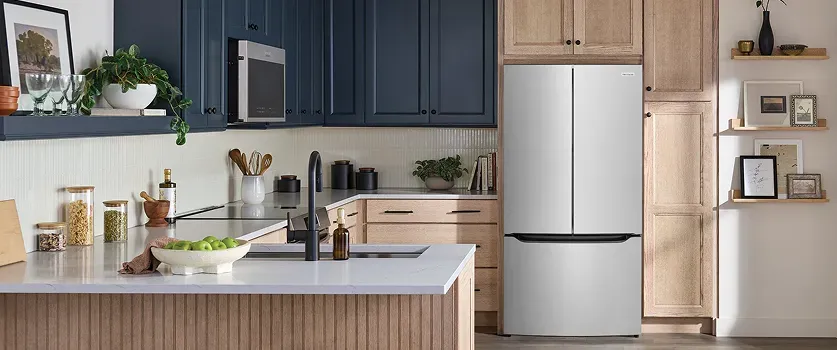
Choosing the right refrigerator size is one of the most important decisions you’ll make for your kitchen. Too small, and you’ll constantly run out of space. Too large, and you may waste energy, money, and valuable kitchen real estate. The right fit balances capacity, dimensions, lifestyle needs, and kitchen layout, not just appearance.
This guide breaks down everything you need to know about refrigerator sizing, from cubic feet and household size to layout considerations and refrigerator styles, so you can shop with confidence.
Why Refrigerator Size Matters More Than You Think
A refrigerator runs 24/7, making it one of the most-used appliances in your home. The size you choose directly impacts:
-
Food storage efficiency
-
Energy consumption
-
Kitchen workflow
-
Long-term satisfaction
An oversized refrigerator may seem appealing, but it can lead to higher energy use and wasted space. On the other hand, undersizing often results in overcrowding, poor air circulation, and spoiled food.
Choosing the right size means matching the refrigerator to how your household actually lives, not just how it looks in the showroom.
Refrigerator Capacity Explained: What Does Cubic Feet Mean?
Refrigerator capacity is measured in cubic feet, which refers to the total interior storage space. This includes both the fresh food compartment and the freezer.
General Refrigerator Capacity Guidelines by Household Size
-
1-2 people: 12–18 cubic feet
-
3-4 people: 18–25 cubic feet
-
5+ people: 25–30+ cubic feet
These ranges provide a starting point, but your eating habits matter just as much. Households that cook frequently, buy in bulk, or entertain often may need more space, even with fewer people.

How Your Food Habits Affect Refrigerator Size
Ask yourself these questions before choosing a size:
-
Do you cook most meals at home?
-
Do you shop weekly or biweekly?
-
Do you buy frozen foods in bulk?
-
Do you store large platters or meal prep containers?
If you tend to stock up on groceries, prioritize a refrigerator with wider shelves, adjustable storage, and spacious freezer capacity, even if your household is smaller.
Standard Refrigerator Dimensions to Know
Capacity tells you how much it can hold, but dimensions determine whether it fits in your kitchen.
Typical Refrigerator Widths
-
24 inches (apartment-sized)
-
30 inches
-
33 inches
-
36 inches (most common)
Typical Heights
-
65-70 inches (standard-depth)
-
70-73 inches (counter-depth or premium models)
Depth Considerations
-
Standard-depth: Extends past counters, offers more interior space
-
Counter-depth: Flush with cabinetry, sleeker look, slightly less capacity
Always measure:
-
Width
-
Height (including hinges)
-
Depth (including doors and handles)
-
Clearance for door swing and ventilation
Choosing the Right Refrigerator Style for Your Space
Refrigerator style plays a major role in how efficiently you use space, how easily you access food, and how well the appliance fits into your kitchen layout. While capacity is important, the configuration of doors, shelves, and freezer placement often matters just as much.
French Door Refrigerators
French door refrigerators combine a double-door fresh food section on top with a freezer drawer below. They’re one of the most popular choices for modern kitchens.
Why choose a French door refrigerator?
-
Wide shelves ideal for large platters and meal prep
-
Less cold air loss when opening only one door
-
Flexible interior storage and adjustable shelving
-
Available in standard-depth and counter-depth designs
Things to consider:
-
Typically higher price point
-
Requires adequate door clearance
French door models often range from 20-30+ cubic feet, making them ideal for families, home cooks, and entertainers who need maximum fresh food space.
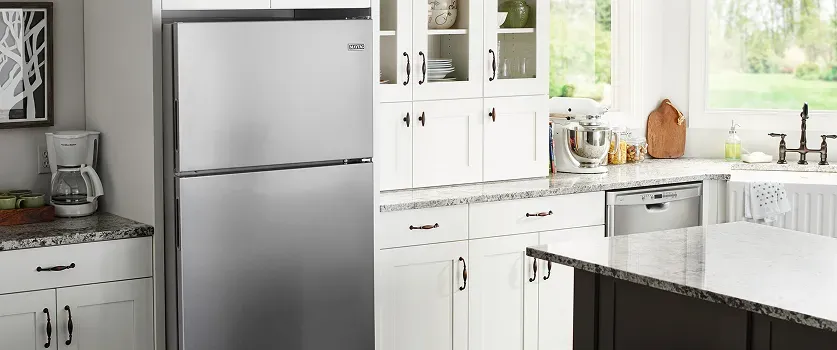
Top Mount Refrigerators
Top mount refrigerators, also known as top freezer refrigerators, feature a freezer compartment above the fresh food section and remain one of the most space-efficient and budget-friendly options available.
Why choose a top mount refrigerator?
-
Compact footprint ideal for smaller kitchens or apartments
-
Typically narrower and shorter than other styles
-
Lower upfront cost and strong energy efficiency
-
Simple layout with fewer moving parts
Things to consider:
-
Fresh food is lower, requiring more bending
-
Narrower shelves may limit storage for wide platters
Top mount models generally range from 14-20 cubic feet, making them a practical choice for individuals, couples, or secondary kitchens such as basements and garages.
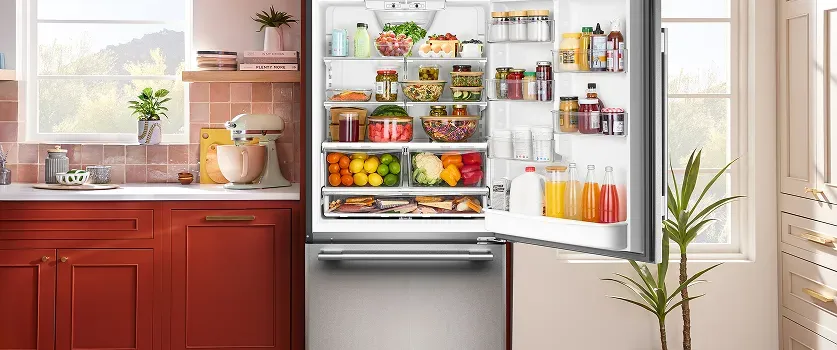
Bottom Freezer Refrigerators
Bottom freezer refrigerators place fresh food at eye level, which many homeowners find more ergonomic and convenient.
Why choose a bottom freezer refrigerator?
-
Easier access to frequently used refrigerated items
-
Freezer drawers provide better organization
-
Often available in counter-depth options for a built-in look
Things to consider:
-
Freezer drawers may require bending for access
-
Can be slightly more expensive than top freezer models
This style typically offers 18-25 cubic feet of capacity and works well for households that prioritize fresh foods over frozen items.
Side-by-Side Refrigerators
Side-by-side refrigerators split the unit vertically, with the freezer on one side and the refrigerator on the other.
Why choose a side-by-side refrigerator?
-
Narrow door swing, ideal for tight kitchen layouts
-
Easy access to both freezer and refrigerator items
-
Often includes ice and water dispensers
Things to consider:
-
Narrow compartments may limit storage of wide items
-
Less flexible shelving compared to French door models
With capacities typically ranging from 20-28 cubic feet, side-by-side refrigerators are a strong option for kitchens with limited clearance or high traffic areas.
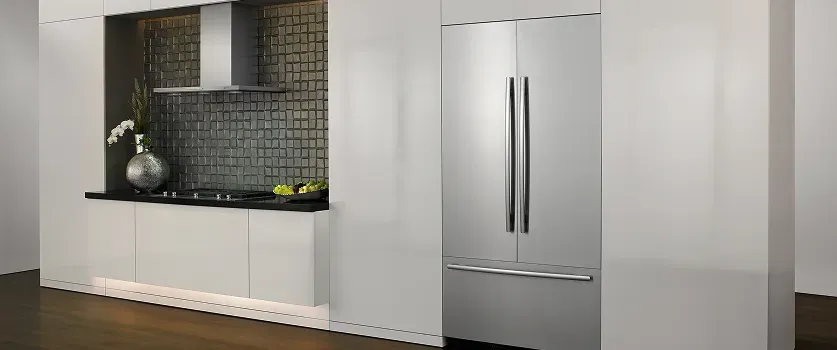
Built-In Refrigerators
Built-in refrigerators are designed to sit flush with cabinetry for a seamless, high-end appearance.
Why choose a built-in refrigerator?
-
Integrated look that elevates kitchen design
-
Taller profiles maximize vertical storage
-
Custom panel options available
Things to consider:
-
Higher cost than freestanding models
-
Professional installation required
-
Limited size flexibility
Built-in refrigerators often prioritize design and layout efficiency over raw cubic-foot capacity, making them ideal for luxury kitchens and long-term renovations.
Which Refrigerator Style Is Best for Your Kitchen?
When deciding on a refrigerator style, consider:
-
Kitchen size and layout
-
Door swing clearance
-
Storage habits
-
Frequency of cooking and entertaining
-
Accessibility needs
The best refrigerator style is the one that fits naturally into your space and supports how your household actually functions day to day.
Built-In vs Freestanding Refrigerators: Size Differences
Built-in refrigerators are designed to sit flush with cabinetry and often come in narrower widths with taller profiles. While they may have less interior volume, they maximize vertical space and deliver a seamless look.
Freestanding refrigerators offer more flexibility in size, price, and configuration, making them a popular choice for most households.
Energy Efficiency and Refrigerator Size
Larger refrigerators generally use more energy, but efficiency also depends on design and technology.
When choosing a size:
-
Look for ENERGY STAR®-certified models
-
Avoid oversizing “just in case”
-
Choose adjustable shelving to maximize usable space
A well-sized refrigerator can save energy without sacrificing convenience.
Common Refrigerator Sizing Mistakes to Avoid
-
Choosing based on looks alone
-
Forgetting door swing clearance
-
Ignoring kitchen traffic flow
-
Oversizing for occasional use
-
Underestimating freezer needs
Avoiding these mistakes ensures your refrigerator works with your kitchen, not against it.
Find the Right Refrigerator Fit at McKinney’s Appliance
Choosing the right refrigerator size doesn’t have to be overwhelming. At McKinney’s Appliance, our experts help you match capacity, dimensions, and features to your home and lifestyle.
McKinney’s Appliance offers a wide range of energy-saving models across refrigeration, laundry, dishwashers, and cooking appliances from top appliance brands in the industry.
Visit McKinney’s Appliance today at one of our Olympia locations to discover the perfect refrigerator fit for your home. We also offer financing and rebate opportunities to help you find the right home appliances with confidence and peace of mind.
FAQs: What Size Refrigerator Do I Need for My Home?
How many cubic feet do I need per person?
A good rule of thumb is 4-6 cubic feet per person, depending on how often you cook and shop.
Is a bigger refrigerator always better?
Not necessarily. A refrigerator that’s too large can waste energy and space. The best size fits your actual food storage needs.
What size refrigerator fits a standard kitchen?
Most standard kitchens accommodate a 36-inch-wide refrigerator with 20-25 cubic feet of capacity.
Should I choose counter-depth or standard-depth?
Counter-depth models offer a built-in look, while standard-depth models provide more interior space at a lower cost.
Can McKinney’s Appliance help with sizing and installation?
Yes. Our team can help measure your space, recommend the right size, and ensure proper installation.